
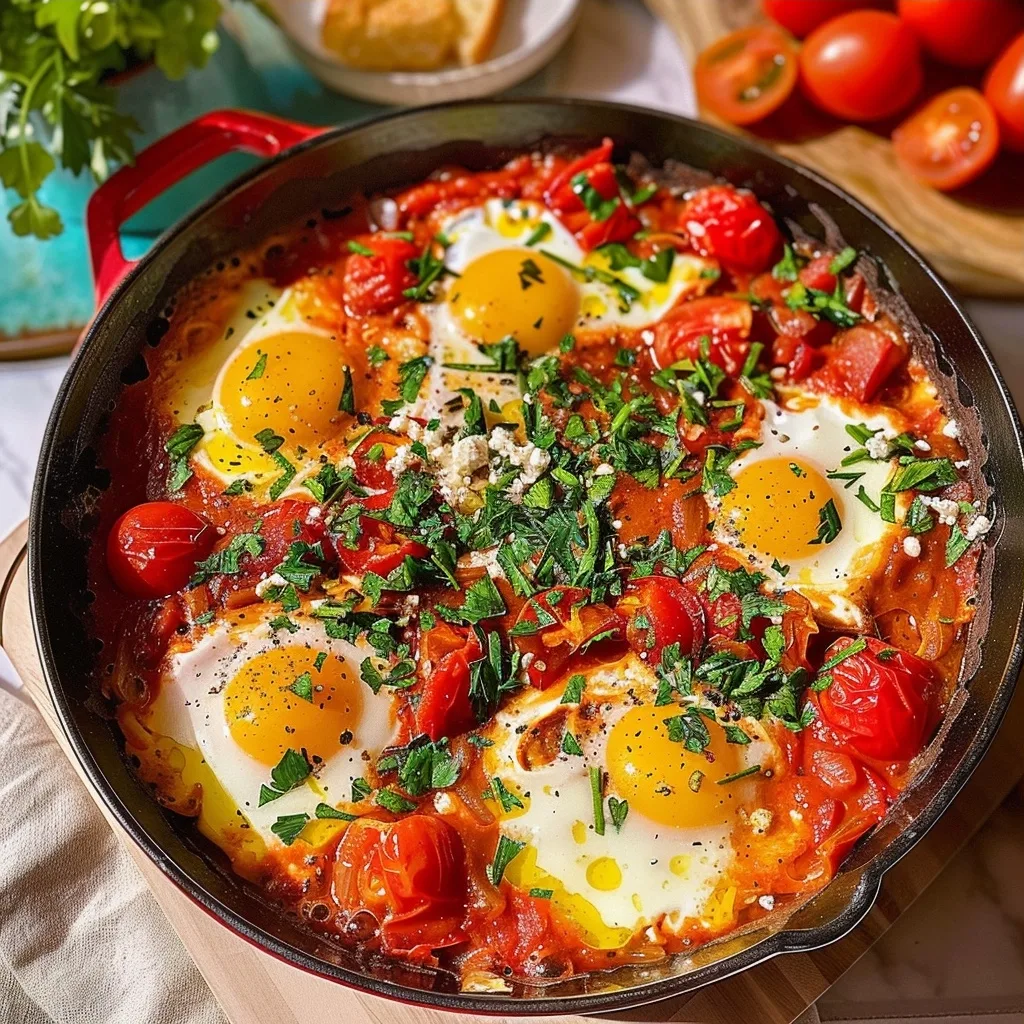
Mediterranean shakshuka is a vibrant, savory dish featuring eggs poached directly in a spiced tomato and pepper sauce. This popular Middle Eastern and North African breakfast, brunch, or light dinner offers a delightful combination of textures and tastes. Its simplicity and profound flavor make it a standout choice for any meal.
Recipe Overview
| Prep Time | 15 minutes |
| Cook Time | 30 minutes |
| Total Time | 45 minutes |
| Servings | 2-3 |
| Difficulty | Easy |
| Cuisine | Mediterranean / Middle Eastern |
Why This Recipe Works
This shakshuka recipe is a testament to how simple ingredients can create extraordinary depth of flavor. The foundation of sautéed onions and peppers, infused with warm spices like coriander, paprika, and cumin, builds a deeply aromatic base. The richness from the chopped tomatoes and smooth tomato sauce melds beautifully, creating a luscious sauce that cradles the eggs perfectly.
The magic truly happens with the addition of the eggs. Poaching them directly in the simmering sauce allows them to absorb the surrounding flavors while cooking to your preferred doneness. Achieving set whites and runny yolks is a delightful outcome achieved with precise temperature control. This method ensures every bite is a harmonious blend of tender vegetables, rich tomato, and perfectly cooked egg.
Ingredients
| Ingredient | Quantity | Notes |
|---|---|---|
| Extra virgin olive oil | 3 tablespoons | Use a good quality oil for best flavor. |
| Large yellow onion | 1 | Finely chopped for even cooking. |
| Green peppers | 2 | Seeded and chopped. Bell peppers work well. |
| Garlic cloves | 2 | Minced for aromatic intensity. |
| Ground coriander | 1 teaspoon | Adds a warm, earthy note. |
| Sweet paprika | 1 teaspoon | Provides color and mild sweetness. |
| Ground cumin | 1/2 teaspoon | Adds depth and a smoky undertone. |
| Red pepper flakes | pinch (optional) | For a touch of heat. Adjust to taste. |
| Kosher salt | to taste | Essential for balancing flavors. |
| Black pepper | to taste | Freshly ground is recommended. |
| Tomatoes, chopped | 6 medium (about 6 cups) | Fresh tomatoes provide the best texture. Canned diced tomatoes are a good alternative. |
| Tomato sauce | 1/2 cup | Adds body and a smoother sauce consistency. |
| Large eggs | 6 | Room temperature eggs cook more evenly. |
| Fresh parsley leaves | 1/4 cup | Chopped, for garnish and freshness. |
| Fresh mint leaves | 1/4 cup | Chopped, adds a bright, herbaceous contrast. |
Step-by-Step Instructions
Sauté the Aromatics
- Heat the olive oil in a large skillet set over medium heat.
- Once the oil begins to shimmer, add the chopped onions, green peppers, and minced garlic.
- Stir in the ground coriander, sweet paprika, ground cumin, and a pinch of red pepper flakes if using.
- Season with kosher salt and black pepper.
- Cook, stirring occasionally, until the vegetables have softened and become fragrant, about 5 minutes.
Finish the Sauce
- Add the chopped tomatoes and tomato sauce to the skillet.
- Stir the ingredients together to combine them with the sautéed vegetables and spices.
- Cover the skillet and let the sauce simmer gently for about 15 minutes, allowing flavors to meld.
- Uncover the skillet and continue to cook for an additional 5-10 minutes, allowing the sauce to reduce and thicken.
- Taste the sauce and adjust seasoning with salt and pepper as needed.
Add the Eggs
- Using a wooden spoon, carefully create 6 distinct indentations, or “wells,” in the thickened tomato mixture.
- Ensure the indentations are spaced evenly across the skillet to allow for individual egg cooking.
- Gently crack one large egg into each indentation.
Finish the Eggs
- Reduce the heat to medium-low to prevent the bottom from scorching and ensure gentle cooking.
- Cover the skillet tightly with a lid.
- Cook for 5-8 minutes, or until the egg whites are fully set but the yolks remain runny.
Garnish and Serve
- Once the eggs are cooked to your liking, uncover the skillet.
- Generously sprinkle the chopped fresh parsley and mint leaves over the entire dish.
- Add more black pepper or crushed red pepper flakes if desired for an extra kick.
- Serve the Mediterranean shakshuka immediately, directly from the skillet, with warm bread for dipping.
Chef Tips for Perfect Results
- Use a Cast-Iron Skillet: A heavy-bottomed skillet, like cast iron, distributes heat evenly and retains warmth, ideal for simmering the sauce and poaching eggs without hot spots.
- Don’t Overcrowd the Pan: Ensure you have enough space in your skillet for the sauce to reduce properly and for each egg to cook independently without running into each other.
- Control the Heat: After adding the eggs, lower the heat significantly. This allows the whites to set slowly and evenly without overcooking the yolks or burning the sauce.
- Room Temperature Eggs: Using eggs at room temperature promotes more even cooking. They are less likely to crack and will cook faster and more uniformly than cold eggs.
- Fresh Herbs are Key: The fresh parsley and mint added at the end are crucial for brightness. Don’t skip them; they lift the rich flavors of the sauce and perfectly complement the eggs.
Common Mistakes to Avoid
- Using Underripe Tomatoes: Underripe tomatoes lack sweetness and can result in a bland, watery sauce. Fix: Use ripe, flavorful tomatoes or good quality canned tomatoes for consistent results.
- Rushing the Sauce Reduction: An insufficiently reduced sauce will be too thin and watery, detracting from the dish’s texture and flavor concentration. Fix: Allow the sauce to simmer uncovered for the recommended time to achieve the desired thickness.
- Overcooking the Eggs: Overcooked egg yolks become rubbery and dry, losing their desirable fluidity. Fix: Monitor the eggs closely and remove the skillet from the heat as soon as the whites are set.
- Skipping the Garnish: The fresh herbs are not just for appearance; they add essential brightness and flavor contrast that balances the richness. Fix: Always add fresh parsley and mint just before serving for maximum impact.
- Using Too High Heat for Eggs: High heat will cook the eggs too quickly, potentially burning the bottom of the sauce and leaving the yolks overcooked or the whites unevenly set. Fix: Reduce heat to medium-low and cover to allow gentle, even cooking.
Variations and Substitutions
| Ingredient | Substitution | Impact on Flavor |
|---|---|---|
| Green peppers | Red bell pepper, poblano pepper, or jalapeño | Changes the sweetness and heat profile of the base. Poblano adds mild heat, jalapeño significant heat. |
| Fresh tomatoes | Canned diced tomatoes (preferably San Marzano) | Canned tomatoes offer a convenient, consistent base, often richer in flavor than out-of-season fresh tomatoes. |
| Mint leaves | Cilantro or dill | Cilantro adds a citrusy, peppery note; dill offers a mild anise flavor. Both provide freshness. |
| Spices (Coriander, Cumin, Paprika) | Ras el hanout, harissa paste (sparingly) | Ras el hanout offers a complex, fragrant blend. Harissa adds significant heat and chili flavor. |
| Eggs | Quail eggs (use more per well) | Smaller size, richer yolk. Ensure they cook through. |
Serving Suggestions and Pairings
Mediterranean shakshuka is wonderfully versatile. Serve it piping hot directly from the skillet. It pairs perfectly with warm, crusty bread, such as pita, challah, or a rustic baguette, essential for scooping up every last drop of the flavorful sauce. A simple side salad with a lemon-tahini dressing provides a refreshing contrast.
For brunch, consider serving it alongside avocado slices or a dollop of labneh or thick Greek yogurt. This dish also makes a satisfying light dinner. Ensure you have plenty of bread or couscous on hand to soak up the delicious tomato base.
Storage and Reheating
| Method | Duration | Instructions |
|---|---|---|
| Refrigerator | 2-3 days | Store completely cooled shakshuka in an airtight container. Eggs may firm up upon reheating. |
| Reheating (Stovetop) | ~5-10 minutes | Gently reheat the sauce in a skillet over medium-low heat. Add a splash of water if too thick. Crack fresh eggs into the sauce and cover to cook until whites are set. |
| Reheating (Microwave) | ~1-2 minutes | Transfer shakshuka to a microwave-safe dish. Reheat gently. It’s best to add fresh eggs after reheating the sauce, as reheated poached eggs can become rubbery. |
Nutritional Information
Approximate values per serving (servings: 3)
| Nutrient | Amount per Serving |
|---|---|
| Calories | 350 kcal |
| Protein | 18 g |
| Fat | 20 g |
| Carbohydrates | 25 g |
| Fiber | 6 g |
| Sugar | 15 g |
| Sodium | 500 mg |
Frequently Asked Questions
Can I substitute bell peppers in Mediterranean shakshuka?
Yes, you can substitute bell peppers. Red bell peppers offer sweetness, while jalapeños add heat. Choose based on your flavor preference and desired spice level for the sauce base.
How do I know when the eggs are done in shakshuka?
The eggs are done when the egg whites are fully opaque and set, while the yolks are still liquid and runny. The cooking time is typically 5-8 minutes over low heat.
My shakshuka sauce is too thin, what can I do?
If your sauce is too thin, remove the lid and simmer uncovered for an additional 5-10 minutes to allow excess moisture to evaporate and the sauce to thicken naturally. Ensure the heat is not too high during this process.
Can I make shakshuka ahead of time?
You can prepare the tomato sauce base ahead of time and refrigerate it. Reheat the sauce thoroughly before making wells and cracking in fresh eggs to poach just before serving for the best texture.
What bread is best for serving shakshuka?
Crusty, absorbent breads are ideal for serving shakshuka. Warm pita, challah, sourdough, or a simple baguette are excellent choices for sopping up the rich tomato sauce.
This Mediterranean shakshuka recipe delivers a hearty, satisfying meal that’s incredibly easy to prepare. The combination of spiced tomato sauce, tender vegetables, and perfectly poached eggs creates a dish that is both comforting and exciting. Its robust flavors, punctuated by fresh herbs, make it a memorable choice for any occasion. Enjoy this flavorful one-pan wonder.
Print
Mediterranean Shakshuka: A Flavorful One-Pan Wonder
- Total Time: 45
- Yield: 2-3 servings 1x
- Diet: Vegetarian
Description
A vibrant and savory dish featuring eggs gently poached in a warmly spiced tomato and pepper sauce. This Mediterranean and Middle Eastern classic is perfect for breakfast, brunch, or a light dinner, offering a delightful combination of textures and profound flavors from simple, fresh ingredients.
Ingredients
3 tablespoons Extra virgin olive oil
1 Large yellow onion, finely chopped
2 Green bell peppers, seeded and chopped
2 Garlic cloves, minced
1 teaspoon Ground coriander
1 teaspoon Sweet paprika
1/2 teaspoon Ground cumin
pinch Red pepper flakes (optional)
Kosher salt, to taste
Black pepper, to taste
6 medium Tomatoes, chopped (about 6 cups)
1 (15 ounce) can Tomato sauce
4–6 Large eggs
Instructions
Heat the olive oil in a large oven-safe skillet or cast-iron pan over medium heat.
Add the chopped onion and bell peppers and sauté until softened, about 8-10 minutes.
Stir in the minced garlic, ground coriander, sweet paprika, ground cumin, and red pepper flakes (if using). Cook for another minute until fragrant.
Add the chopped tomatoes and tomato sauce to the skillet. Season with salt and black pepper to taste. Stir well to combine.
Bring the sauce to a simmer, then reduce the heat to low, cover, and cook for 15 minutes, allowing the flavors to meld.
Using the back of a spoon, create small wells in the tomato sauce.
Carefully crack an egg into each well. Season the eggs with a pinch of salt and pepper.
Cover the skillet again and let the eggs poach in the sauce for 5-10 minutes, or until the whites are set and the yolks are cooked to your desired doneness.
Serve immediately, directly from the skillet.
Notes
Fresh parsley or cilantro, chopped, for garnish.
Serve with crusty bread for dipping.
- Prep Time: 15
- Cook Time: 30
- Category: Mediterranean Diet
- Method: Stovetop
- Cuisine: Mediterranean / Middle Eastern
Nutrition
- Serving Size: 1 serving
- Calories: Estimating around 350-450 kcal per serving, depending on egg size and oil used.
- Sugar: Estimating around 15-20g per serving.
- Sodium: Estimating around 500-700mg per serving, depending on added salt and canned tomato sodium content.
- Fat: Estimating around 20-30g per serving.
- Saturated Fat: Estimating around 5-7g per serving.
- Carbohydrates: Estimating around 25-35g per serving.
- Fiber: Estimating around 8-10g per serving.
- Protein: Estimating around 15-20g per serving.
- Cholesterol: Estimating around 200-300mg per serving.