
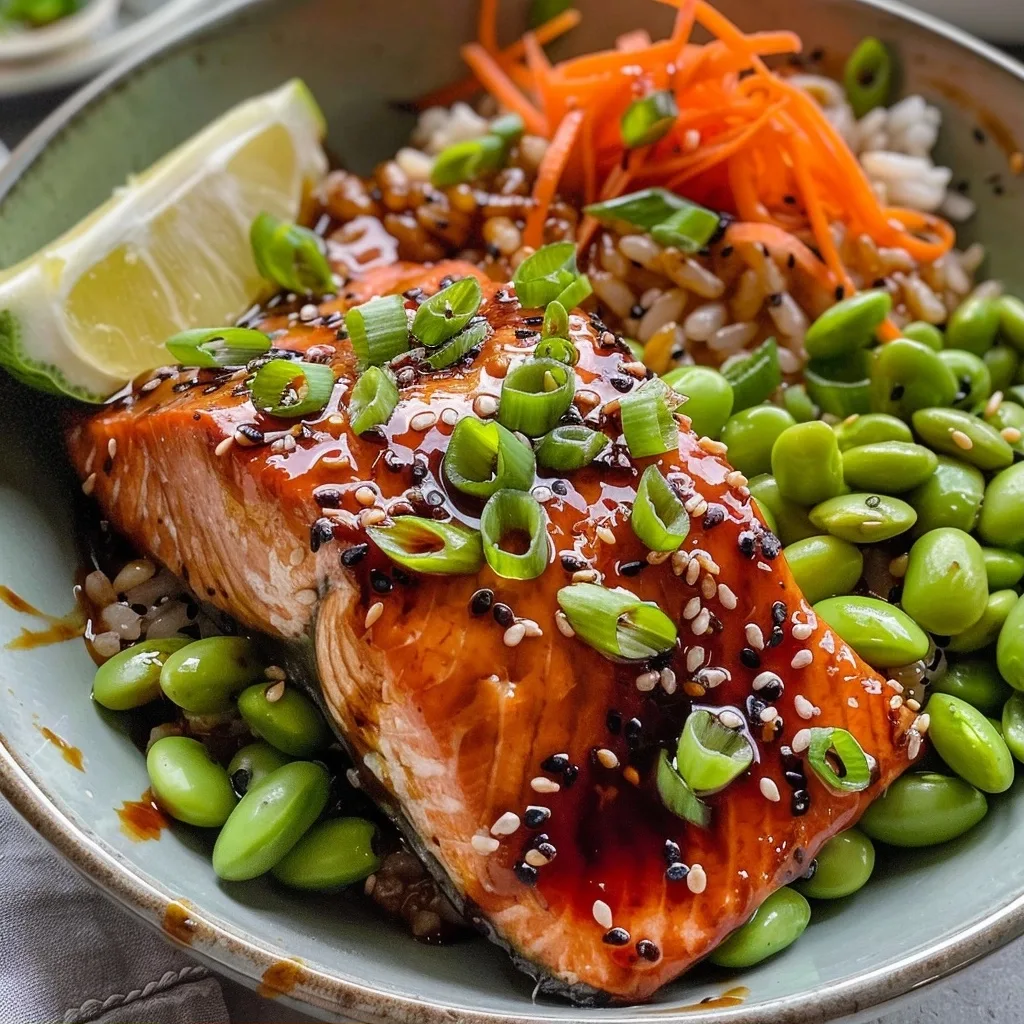
Teriyaki salmon with edamame serves as a perfectly balanced meal combining heart-healthy omega-3 fatty acids with plant-based protein for lasting energy. This refined dish utilizes a quick homemade glaze to highlight the natural richness of the fish. Diners will appreciate the clean aesthetic and nutritional density of these ingredients, making it an excellent choice for a productive weekday evening at home.
Recipe Overview
| Prep Time | 20 minutes |
|---|---|
| Cook Time | 15 minutes |
| Total Time | 35 minutes |
| Servings | 4 |
| Difficulty | Easy |
| Cuisine | Japanese-inspired |
Why This Recipe Works
This dish succeeds because it balances the umami of soy sauce with the subtle sweetness of honey and brown sugar. Preparing the sauce from scratch ensures there are no hidden additives, resulting in a cleaner flavor profile than bottled alternatives found in most grocery stores.
My experience cooking this meal centers on the texture contrast between the tender salmon and the slight pop of shelled edamame. The addition of fresh cucumbers and shredded carrots provides a crispness that elevates the entire experience, while the avocado adds a necessary creaminess to round out the flavor profile.
Ingredients
| Ingredient | Quantity | Notes |
|---|---|---|
| Salmon fillets | 4 (4-6 oz each) | Fresh, skin-on preferred |
| Low-sodium soy sauce | 1/2 cup | Use tamari for gluten-free |
| Light brown sugar | 1/4 cup | Packed firmly |
| Rice vinegar | 2 tbsp | Adds necessary acidity |
| Toasted sesame oil | 1 tbsp | Adds depth |
| Honey | 1 tbsp | Natural sweetener |
| Ground ginger | 3/4 tsp | Provides warmth |
| Garlic powder | 1/2 tsp | Even flavor distribution |
| Red pepper flakes | 1/8 tsp | Optional heat element |
| Cornstarch | 1 tsp | With 1 tsp cool water |
| Cooked rice | 2 cups | Basmati or sushi rice works |
| Shelled edamame | 1 cup | Thawed if frozen |
| Shredded carrots | 1 cup | Provides crunch |
| Chopped cucumber | 1 cup | English cucumber is best |
| Avocado | 1 count | Sliced thin |
Step-by-Step Instructions
Preparing the Teriyaki Glaze
- Combine the soy sauce, brown sugar, rice vinegar, sesame oil, honey, ginger, garlic powder, and red pepper flakes in a small saucepan.
- Bring the mixture to a gentle boil over medium-high heat.
- Reduce heat to medium and simmer for 1 to 2 minutes to extract the aromatics.
- Whisk the cornstarch and cool water into a slurry and pour into the saucepan.
- Stir continuously until the sauce thickens enough to coat the back of a spoon.
- Remove from heat and allow the glaze to cool for 5 to 10 minutes.
Marinating and Baking
- Place the four salmon fillets into a large glass bowl.
- Pour half of the prepared sauce over the salmon and set aside.
- Marinate the fish at room temperature for 15 to 20 minutes before cooking.
- Preheat your oven to 400 degrees Fahrenheit and line a baking sheet with parchment paper.
- Arrange the fillets skin-side down on the prepared sheet.
- Discard the used marinade and roast the fish for 12 to 15 minutes until it flakes easily.
Assembling the Bowls
- Divide the cooked rice into four generous serving bowls.
- Top each bowl with a perfectly roasted salmon fillet and a portion of edamame.
- Add the fresh shredded carrots, cucumber slices, and avocado to the bowl.
- Drizzle the reserved teriyaki sauce over the salmon and vegetable components.
- Garnish with optional sesame seeds and sliced green onions for presentation.
Chef Tips for Perfect Results
- Always pat your salmon fillets dry with a paper towel before marinating to ensure the sauce adheres to the surface properly.
- Use an instant-read thermometer to check for doneness; the salmon should reach 135-140 degrees Fahrenheit for a medium-well internal texture.
- Store unused glaze in a sealed glass container for up to one week to flavor future roasted vegetables or proteins.
- Cut your carrots and cucumbers into uniform sizes to ensure every forkful contains a perfect bite of texture.
Common Mistakes to Avoid
- Overcrowding the baking sheet releases steam instead of roasting the fish, which prevents the salmon from developing a nice seared edge.
- Using the leftover raw marinade is a safety hazard; always discard the liquid that touched the raw fish.
- Simmering the glaze too long will concentrate the sugars and may cause the sauce to taste burnt or overly salty.
- Buying pre-cooked salmon that is already glazed often masks the quality of the fish; stick to raw fillets to control the flavor intensity.
Variations and Substitutions
| Ingredient | Substitution | Flavor Impact |
|---|---|---|
| Soy sauce | Tamari | Less salty and gluten-free |
| Honey | Maple syrup | Adds slightly woody sweetness |
| Rice vinegar | Apple cider vinegar | More tart finish |
Frequently Asked Questions
Can I substitute frozen salmon for fresh?
Frozen salmon works perfectly in this recipe as long as it is fully thawed and patted dry before marinating.
How do I know when the salmon is done?
The salmon is done when it registers 135 degrees Fahrenheit on a meat thermometer and flakes easily under a fork.
Can I prepare the components in advance?
You can prepare the teriyaki sauce and cook the rice up to three days in advance for quick assembly.
How do I stop the avocado from browning?
Drizzle a small amount of lime or lemon juice over the sliced avocado immediately before serving the bowl.
What is the best way to reheat leftovers?
Reheat the salmon gently in a covered pan over low heat or in a microwave-safe dish for 60 seconds.
Conclusion
This teriyaki salmon with edamame offers a nutrient-dense approach to dinner without sacrificing bold taste. By using quality ingredients and proper cooking techniques, you can yield professional results right in your own kitchen. Whether you are meal prepping for a busy week or hosting a casual dinner, this combination of savory glaze and fresh vegetables remains an unbeatable choice. Add this staple to your regular rotation to enjoy a flavorful, wholesome, and incredibly satisfying meal every single time.
Print
Teriyaki Salmon with Edamame
- Total Time: 35
- Yield: 4 servings 1x
- Diet: Pescatarian
Description
A perfectly balanced meal featuring tender salmon fillets glazed in a scratch-made, umami-rich teriyaki sauce. Served over a bed of fluffy rice, this bowl is complemented by vibrant edamame, crisp carrots, cooling cucumber, and creamy avocado. It is a nutritious, protein-packed choice that provides sustained energy and an impressive aesthetic suitable for any weeknight dinner.
Ingredients
4 salmon fillets (4–6 oz each)
1/2 cup low-sodium soy sauce
1/4 cup light brown sugar, packed
2 tbsp rice vinegar
1 tbsp toasted sesame oil
1 tbsp honey
3/4 tsp ground ginger
1/2 tsp garlic powder
1/8 tsp red pepper flakes
1 tsp cornstarch mixed with 1 tsp cool water
2 cups cooked rice
1 cup shelled edamame, thawed
1 cup shredded carrots
1 cup chopped cucumber
1 avocado, sliced
Instructions
Combine soy sauce, brown sugar, rice vinegar, sesame oil, honey, ginger, garlic powder, and red pepper flakes in a small saucepan.
Bring to a gentle boil over medium-high heat, then reduce to medium.
Whisk in the cornstarch slurry and simmer until the sauce thickens into a glaze, then remove from heat.
Pat salmon fillets dry and sear in a pan over medium heat until cooked through, brushing generously with the glaze during the final minutes.
Divide the cooked rice into four bowls.
Top each bowl with a glazed salmon fillet, edamame, shredded carrots, cucumber, and avocado slices.
Notes
Ensure you use low-sodium soy sauce to manage salt intake, or use tamari to keep this dish gluten-free. For the best texture, use English or Persian cucumbers as they have fewer seeds. Store leftovers in an airtight container in the refrigerator for up to 2 days.
- Prep Time: 20
- Cook Time: 15
- Category: Sheet Pan Dinners
- Method: Stovetop
- Cuisine: Japanese-inspired
Nutrition
- Serving Size: 1 bowl
- Calories: 480
- Sugar: 14g
- Sodium: 650mg
- Fat: 22g
- Saturated Fat: 4g
- Carbohydrates: 42g
- Fiber: 7g
- Protein: 32g
- Cholesterol: 85mg