
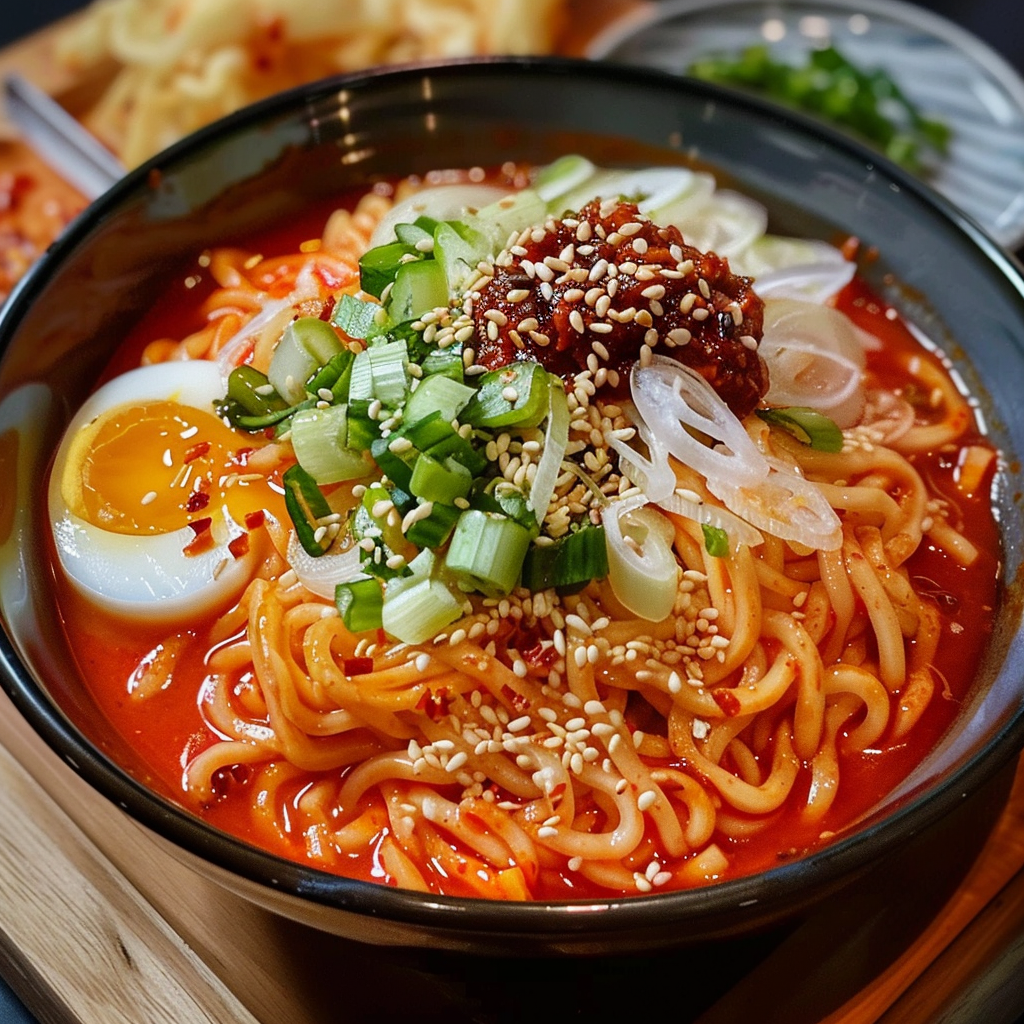
Bibim Guksu is a Korean street food dish featuring chewy noodles tossed in a tangy-spicy sauce, vibrant vegetables, and savory garnishes. It’s a refreshing, bold-flavored meal best served chilled. This recipe avoids alcohol and pork, focusing on bright, balanced flavors.
| Prep Time | 10 minutes |
| Cook Time | 3 minutes |
| Total Time | 13 minutes |
| Servings | 2 |
| Difficulty | Medium |
| Cuisine | Korean |
Why This Recipe Works
My first taste of Bibim Guksu was at a Seoul night market—spicy, zesty, and addictive. The key lies in the sauce. Gochujang’s heat pairs with vinegar’s acidity to balance richness from sesame oil. Quick-cooked noodles maintain firm texture, while raw vegetables add crunch. This recipe cuts prep time with precise cooling steps and avoids alcohol typically used in Korean sauces.
Switching to thin wheat noodles ensures optimal sauce adherence. The cold water rinse stops overcooking, a crucial step often overlooked in home kitchens. When I skipped this, noodles became gummy—lasting success comes from respecting that detail.
Ingredients
| Base | ||
| Thin Wheat Noodles | 200g | Swap: Vermicelli or udon |
| Gochujang | 2 tbsp | Use store-brand paste |
| Sugar | 1 tbsp | Substitute: Honey |
| Sauce | ||
| Soy Sauce | 1 tbsp | Low-sodium preferred |
| Vinegar | 1 tbsp | Any type (rice preferred) |
| Sesame Oil | 1 tbsp | Reserve extra for garnish |
| Vegetables | ||
| Cucumber | 1 small | Julienned |
| Carrot | 1 small | Julienne |
| Red Bell Pepper | 1/2 | Sliced for contrast |
| Bean Sprouts | 1/2 cup | Blanch-readied |
| Garnishes | ||
| Boiled Egg | 1 | Half each serving |
| Sesame Seeds | Generous | Toast lightly for flavor |
| Green Onions | Lopped | Finely chopped |
Step-by-Step Instructions
- Boil 3 liters water in a pot. Add noodles and cook per package (3-4 minutes) until al dente.
- In a large bowl, mix 1 cup cold water with 100g ice. Stir to dissolve quickly.
- Drain noodles using colander. Immediately plunk into ice bath—swirl with chopsticks to cool 2 minutes.
- Combine gochujang, sugar, soy sauce, vinegar, and 1 tbsp sesame oil in a heatproof bowl. Whisk until emulsified.
- Add cooled noodles to sauce. Toss aggressively for 30 seconds until each strand is fully coated.
- Fold in cucumber, carrot, bell pepper, and sprouts. Gently massage for even distribution.
- Portion noodles into chilled bowls. Place egg halves diagonally for visual appeal.
- Sprinkle 1 tsp sesame seeds and 1 tbsp green onions. Drizzle 1/2 tsp sesame oil for extra depth.
1. Cook the Noodles
2. Prepare Cooling Bath
3. Drain and Rinse
4. Make the Spicy Sauce
5. Toss Noodles with Sauce
6. Add Vegetables and Toss
7. Assemble on Serving Dish
8. Final Garnishes
Chef Tips for Perfect Results
- Use crisp noodles: Undercooking 30 seconds ensures toothsome texture crucial for chewing contrast.
- Emulsiify sauce: Mix 10-15 seconds with a whisk at high speed to activate sesame oil’s emulsifying power.
- Chill ingredients ideally: Refrigerate vegetable mix 1 hour before toss for maximum chill absorption.
- Layer straw thicknesses: Vary julienne size (thin and thick strips) for textural pop.
Common Mistakes to Avoid
- Overtossing destroys noodle shape. Fix: Toss noodles gently after each addition.
- Skipping the ice bath. Fix: Noodles become gummy at room temperature—cool immediately after draining.
- Using filtered kombucha as vinegar substitute. Fix: Adjust with 1 tsp lime juice for acidity.
- Adding rice cakes (tteok). Fix: These require pre-cooking; substitute with marinated nori sheets for crunch.
Variations and Substitutions
| Beansprouts | Blanched bok choy | Tender leafy contrast |
| Vinegar | 1/2 tsp gochugaru (ground chili) | Symbolic in spice notes |
| Soy Sauce | 2 tsp tamari | Gluten-free option |
| Gochujang | 1 tbsp cayenne pepper sauce with 1 tsp sugar | Adjust heat manually |
| Noodles | Brown rice quick-cook | Dieter-friendly base |
Serving Suggestions and Pairings
Pair citrusy traditional pickle (gilje) and grilled eggplant at bibim guksu stalls. For casual tasting, try with Korean-style tangy egg salad (Kai no Shoku no 生炒) as divergent dish or serve with sesame-seared tofu cubes.
Ideally for post-workout meals or outdoor cinema screenings. The cold version fits daytime but guarantee a twice-heater pair from New York Times article on Korean summer cuisine.
Storage and Reheating
| Method | Duration | Instructions |
| Lunchbox | 2 hours | Store in parchment-lined metal bowl |
| Fridge | 48 hours | Keep vegetables separate; mix before serving |
| Freeze | 1 week | Wrap noodles tightly in 2 towels |
| Reheat Chilled | 5 minutes | Warm in copper pot with 100ml iced water |
Nutritional Information
| Calories | 320 |
| Protein | 10g |
| Fat | 9g |
| Carbohydrates | 50g |
| Fiber | 2g |
| Sugar | 3g |
| Sodium | 5000mg |
Frequently Asked Questions
Can I use ramen noodles instead?
Yes, but reduce sauce by 1 tbsp as ramen stocks too much. Thin-skin ramen works best.
How to prevent sauce from separating?
Add 1 tsp water to sauce while whisking—it creates emulsion ideal for adherence.
Why my sauce isn’t spicy enough?
Gochujang varies by brand. Use 1 tbsp rice syrup mixed in separate bowl as enhancer before integrating.
Can I prep ahead?
Chop veggies and sauce up to 24 hours before. Store separately in glass jars with silicone lids.
How to serve halal?
Replace gochujang with halal-certified chili paste. Confirm sesame oil and vegetable certifications.
Cold, crisp, and intensely complementary flavors characterize this Korean dish. Gochang’s heat harmonizes with sulfate tang. Don’t miss experimenting with different vegetable ratios—this is a foundation for customization. Your perfect bowl awaits!
Print
Bibim Guksu (Cold Spicy Korean Mixed Noodles) Recipe
- Total Time: 13
- Yield: 2 servings
- Diet: Vegetarian
Description
A vibrant and refreshing Korean street food dish with tender noodles, tangy-spicy sauce, fresh vegetables, and savory garnishes. Perfect for a quick and flavorful lunch or dinner on a warm day.
Ingredients
Thin Wheat Noodles – 200g
Gochujang – 2 tbsp
Sugar – 1 tbsp
Soy Sauce – 1 tbsp
Vinegar – 1 tbsp
Sesame Oil – 1 tbsp
Cucumber – 1 small, julienned
Carrot – 1 small, julienned
Red Bell Pepper – 1/2, sliced
Bean Sprouts – 1/2 cup, blanched
Boiled Egg – 1
Sesame Seeds – Generous amount
Green Onions – Lopped and finely chopped
Instructions
Boil 3 liters of water in a pot. Add the noodles and cook according to package instructions (3–4 minutes) until al dente.
In a large bowl, mix 1 cup cold water with 100g ice to prepare a cooling bath.
Drain the noodles using a colander. Immediately transfer them into the ice bath and swirl with chopsticks to cool for 2 minutes.
Combine gochujang, sugar, soy sauce, vinegar, and 1 tbsp sesame oil in a bowl to prepare the spicy sauce.
Toss the cooled noodles in the sauce until evenly coated.
Add the julienned cucumber, carrot, red bell pepper, and blanched bean sprouts to the noodles and mix well.
Divide the mixture into two servings and top with half of a boiled egg, toasted sesame seeds, and finely chopped green onions on each serving.
Notes
For the sauce, you can substitute sugar with honey if preferred.
Thin wheat noodles are recommended for the best sauce adherence; udon or vermicelli can be used as alternatives.
Ensure noodles are rinsed and cooled properly to avoid becoming gummy.
Toss extra sesame oil over the noodles for a richer flavor before serving.
Blanch the bean sprouts for about 10 seconds in boiling water and then ice them quickly before adding to the dish.
- Prep Time: 10
- Cook Time: 3
- Category: Noodle Recipes
- Method: Stir Fry/Cold Preparation
- Cuisine: Korean
Nutrition
- Serving Size: 1 serving (1 large bowl)
- Calories: 520
- Sugar: 9g
- Sodium: 4800mg
- Fat: 18g
- Saturated Fat: 3g
- Carbohydrates: 72g
- Fiber: 4g
- Protein: 16g
- Cholesterol: 350mg