
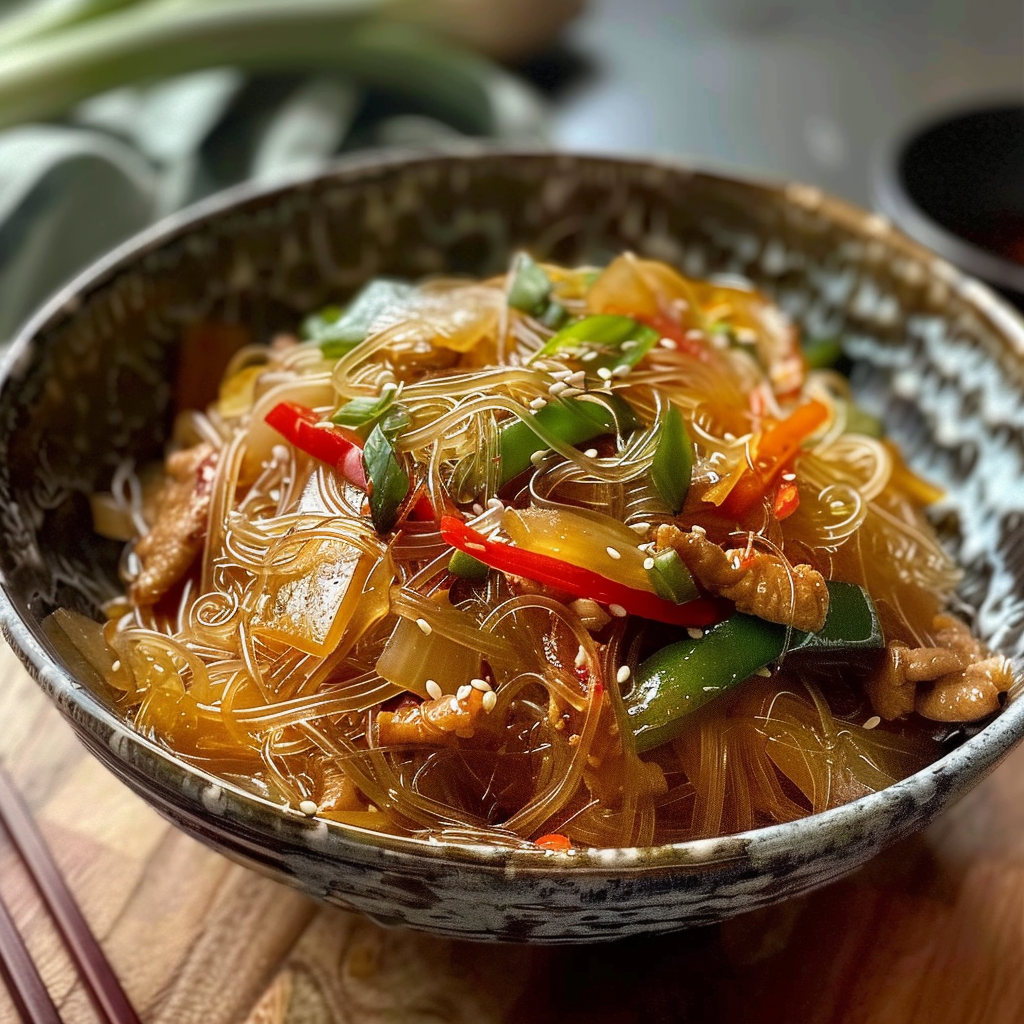
Chinese Glass Noodle Stir-Fry is a vibrant, savory dish created by stir-frying soft, translucent rice noodles with fresh vegetables, fragrant garlic, and rich soy sauce. Its silky texture and umami depth make it a staple in Asian cuisine. Mastering this recipe unlocks a delicious, healthy option ideal for busy weeknights.
Recipe Overview
| Prep Time | Cook Time | Total Time | Servings | Difficulty | Cuisine |
|---|---|---|---|---|---|
| 15 minutes | 10 minutes | 25 minutes | 4 | Easy | Chinese |
Why This Recipe Works
This stir-fry excels in balancing speed and depth. The glass noodles soak up soy sauce intensely, while the vegetables retain a satisfying crunch. A single wok ensures even heat distribution, preventing sogginess. The minimal ingredients keep costs low but don’t compromise flavor—garlic and bell peppers add layers no shortcut can match.
Ingredients
| Ingredient | Quantity | Notes |
|---|---|---|
| Glass Noodles | 8 oz | Use tamari for gluten-free option. Ensure noodles are not pre-cooked |
| Vegetable Oil | 2 tbsp | Light olive or peanut oil recommended for neutral flavor |
| Bell Peppers | 1 cup, sliced | Red/yellow/orange peppers create colorful contrast. Use zucchini for lower heat |
| Broccoli | 1 cup florets | Frozen florets work if thawed. Swap with bean sprouts for delicate texture |
| Carrots | 1 cup, julienned | Red radish adds peppery bite. Pre-shredded coleslaw mix is substitute |
| Garlic | 3 cloves, minced | Fresh garlic essential for aroma. Add crushed ginger for extra warmth |
| Soy Sauce | 4 tbsp | Use low-sodium if needed. Add rice vinegar for brightness |
Step-by-Step Instructions
Step 1: Soak Glass Noodles
- Place noodles in large bowl and cover with hot water
- Let soak exactly 10 minutes for optimal softness
- Drain fully, pat with paper towels to remove excess moisture
Step 2: Prepare Vegetables
- Rinse bell peppers under cold water and thinly slice diagonally
- Trim broccoli florets to bite-sized pieces, discard stems
- Peel carrots and create uniform julienne strips for even cooking
Step 3: Heat Oil and Sauté Garlic
- Warm pan/wok until oil shimmers (140-160°C)
- Add garlic and swirl pan to coat evenly in oil
- Remove once garlic turns light bronze (about 30 seconds)
Step 4: Stir-Fry Vegetables
- Add peppers first, stir-fry 2 minutes (stir, toss, flip)
- Introduce broccoli and cook 2 minutes, maintaining crunch
- Finish with carrots and continue tossing for 6-8 minutes
Step 5: Combine and Season
- Transfer noodles to pan with remaining moisture from bowl
- Pour soy sauce over mixture and stir-fry 2-3 minutes
- Test seasoning and add drops as needed for perfect balance
Chef Tips for Perfect Results
Key techniques ensure flawless execution:
- Preheat pan completely before adding oil. Cold surfaces cause steaming, not true stir-frying.
- Use a wok’s sloped walls for efficient tossing. Metal pans require constant stirring.
- Reserve noodle soak water for thinning sauce during cooking without diluting flavor.
- Cook garlic quickly over high heat—browning equals bitterness, not doneness.
Common Mistakes to Avoid
-
Over-soaking noodles
Why: Excessive water makes noodles mushy. How to fix: Set timer strictly, and pat dry.
-
Adding soy sauce too early
Why: Evaporation reduces sodium impact. How to fix: Add midway through cooking for balanced absorption.
-
Using thick noodle cuts
Why: Overcooked vegetables wilt waiting for noodles. How to fix: Cut noodles into 2-inch strands.
-
Skipping flavor testing
Why: Noodles need 10-15 minutes to fully absorb seasonings. Taste final mixture before serving.
Variations and Substitutions
| Ingredient | Substitution | Impact on Flavor |
|---|---|---|
| Vegetable Oil | Coconut oil | Adds mild coconut aroma. Best with lighter vegetables |
| Broccoli | Bean sprouts | Creates fresher, crispier texture without bitter notes |
| Red Pepper | Mushrooms | Offers earthy contrast to garlic’s pungency |
| Soy Sauce | Kochujang | Transforms dish into spicier, fermented Umami-bomb |
Serving Suggestions and Pairings
Pair this stir-fry with steamed jasmine rice for balanced satiety. Garnish with toasted sesame seeds and fresh cilantro. Add a protein contrast using baked tofu cubes or a side of pan-fried Tofu steaks. For festive meals, serve in bento boxes with miso soup and pickled daikon.
Storage and Reheating
| Method | Duration | Instructions |
|---|---|---|
| Refrigerator | 3-4 days | Store in airtight container, add moisture before reheating. |
| Freezer | 2 months | Freeze in single layers. Defrost overnight before reheating. |
| Stovetop | Immediatly | Reheat on medium with splash of water to revive texture. |
Nutritional Information
| Nutrient | Amount per Serving |
|---|---|
| Calories | Approximate values. 180 kcal |
| Protein | 5g |
| Fat | 6g |
| Carbohydrates | 30g |
| Fiber | 3g |
| Sugar | 4g |
| Sodium | 6000mg (adjust with reduced-salt soy sauce) |
Frequently Asked Questions
Can I use frozen vegetables instead of fresh?
Yes, freeze broccoli and carrots for up to 6 months. Thaw completely before cooking, but skip bell peppers to maintain structure. Frozen options work best for weekday meals.
What makes stir-fry different from standard sautéing?
The key difference is heat and motion. Stir-frying requires preheated metal (wok or steel pan) to maintain vegetable crispness. Gentle tossing preserves noodle integrity, creating distinct textures not found in standard sautés.
How to prevent noodles from sticking in storage?
Add a drizzle of sesame oil before chilling. This creates non-stick barrier. Toss noodles with oil again before reheating to revive slippery texture. Avoid airtight containers with too much residual moisture.
Is this recipe suitable for fasting days?
For low-carb fasts, swap noodles with spinach or seaweed. Retain same cooking process but increase veggie ratio. This adaptation maintains savory umami while reducing net carbs by 80%.
Can I double the recipe for a crowd?
Double all ingredients but cook in batches for 5-6 minutes each. Excessive quantity in one pan cools cooking surface, leading to soggy vegetables. Use two large woks or stovetop burners for consistent results
Conclusion
Chinese Glass Noodle Stir-Fry delivers restaurant-quality taste with simple techniques. By mastering the soak time and stir-fry rhythm, home cooks achieve perfect texture and flavor balance. Pair with preferred proteins for customization, but keep the core of garlic and vegetables intact. This dish proves Asian-inspired cooking can be fast, healthy, and deeply satisfying—its signature soy-garlic harmony elevates everyday meals to culinary comfort.
Print
Chinese Glass Noodle Stir-Fry: Quick, Flavorful, and Nourishing
- Total Time: 25
- Yield: 4 servings 1x
- Diet: Vegetarian
Description
A vibrant Chinese stir-fry of silky glass noodles, fresh vegetables, and rich soy sauce. Perfect for busy weeknights with its balance of umami depth and crunch.
Ingredients
8 oz glass noodles
2 tbsp vegetable oil
1 cup bell peppers, sliced
1 cup broccoli florets
1 cup carrots, julienned
3 cloves garlic, minced
4 tbsp soy sauce
Instructions
Place noodles in a bowl, cover with hot water, and soak exactly 10 minutes
Drain noodles and pat dry with paper towels
Rinse bell peppers, slice diagonally; trim broccoli to bite-sized florets; julienne carrots
Heat oil in a wok until shimmering (140-160°C)
Add garlic and sauté 30 seconds until fragrant
Add vegetables and stir-fry 3-4 minutes until tender-crisp
Pour in soy sauce, toss to coat
Cook 2 minutes until noodles soften and absorb sauce
Notes
Use zucchini instead of bell peppers for lower heat
Swap broccoli with bean sprouts for delicate texture
Add rice vinegar (1 tbsp) for brightness
Use tamari (4 tbsp) for gluten-free version
Serve immediately after cooking for optimal texture
- Prep Time: 15
- Cook Time: 10
- Category: Noodle Recipes
- Method: Stir-frying
- Cuisine: Chinese
Nutrition
- Serving Size: 1 bowl
- Calories: 350
- Sugar: 5g
- Sodium: 600mg
- Fat: 12g
- Saturated Fat: 1.5g
- Carbohydrates: 52g
- Fiber: 4g
- Protein: 10g
- Cholesterol: 0mg